

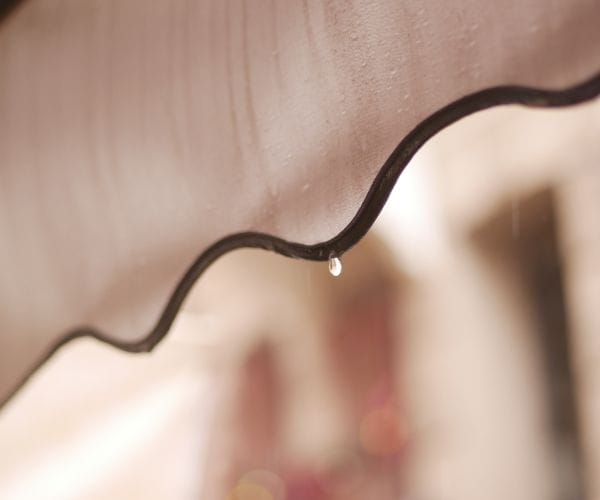
Yes, you can use an awning in the rain, as long as it has been designed and fitted for it.
A quality patio awning with properly coated fabric and a sensible pitch will keep a passing shower off you, your guests and your garden furniture, so the evening carries on outdoors.
How well it copes comes down to three things: the fabric finish, the frame and the way the awning is set up on your wall.
At a Glance
- A quality awning with coated fabric can be used in the rain, provided it is pitched so water runs off.
- Our awning fabric is treated with the Infinity Process, a proprietary coating that repels water and dirt.
- Every awning we make is wind tested to winds of up to 28 km/h, the top end of a moderate breeze.
- Awnings should be retracted in strong wind, storms and snow to protect the frame and fabric.
- For fixed, all-weather cover, a pergola or glass veranda is the better choice.
Need an Awning that’s Built for British weather?
Every awning we design is made in our own UK workshop and fitted by our own engineers. Explore our awnings for the home or arrange a free design consultation to talk through your space.
Are Awnings Waterproof?
A well-made awning will keep you dry through the showers of a British spring and summer. Our fabric is totally impermeable to rainfall, and it is woven from solution-dyed acrylic fibres, which hold their colour season after season. The coating is what protects the fabric from the weather.
How Weatherproof Awning Fabric Works
Our fabric is treated with the Infinity Process, a proprietary high-tech finish. During treatment, nanoparticles completely cover the surface of each fibre and form a permanent lining, protecting both the surface and the inside of the fabric. In practice, that gives you:
- excellent repellency to water and oil, so rain beads up and runs away
- protection against dirt build-up, so the fabric stays cleaner for longer
- lasting protection against mould, backed by antimicrobial activity rated Grade 0 (no growth of fungi or mildew)
- superior dimensional stability, so the fabric keeps its shape and tension
Because the lining is permanent, the protection stays with the fabric for its lifetime. The fabric still needs an occasional clean, and we give full instructions for routine and deeper cleaning after installation.
Awning Rain Run-Off: Why Pitch Matters
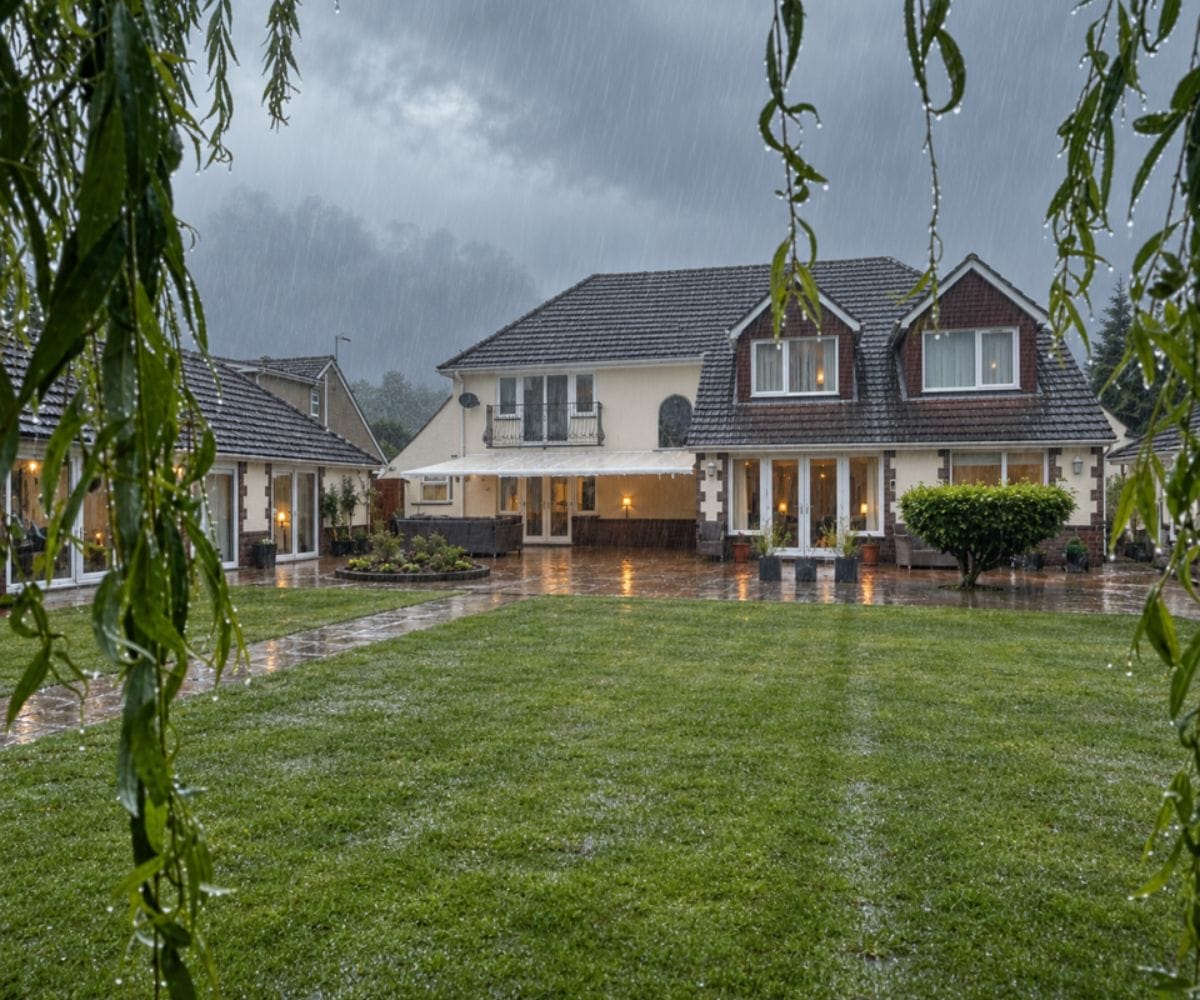
Even the best weatherproof awning fabric needs somewhere for the water to go. The pitch, or angle, lets rain run down the cover and off the front edge. An awning set too flat can let water collect in the middle, and pooled water is heavy, which strains the fabric and arms.
The arm angle on our awnings can be adjusted, so during your survey we set a pitch that suits your wall height, your patio and the headroom you want. If you plan to sit out in the rain often, tell us and we will plan around it.
Using an Awning in Rain and Wind
What the Wind-Test Rating Means in Practice
All of our awnings are wind tested to winds of up to 28 km/h. On the Met Office Beaufort scale, that sits at the top of force 4, a moderate breeze, with mean speeds of 6 to 8 metres per second. Wind performance for external awnings is covered by BS EN 13561, the standard setting out performance requirements, including resistance to wind loads.
In plain terms, a steady breeze is fine. Once the wind picks up beyond that, retract the awning. With electric operation, it folds away in moments.
When to Retract Your Awning
- in strong or gusty wind, or when a storm is forecast
- during snow, as settled snow adds weight
- in prolonged torrential rain, when water arrives faster than it can run off
- overnight or when you go away, unless the forecast is settled
When retracted, the fabric and arms sit inside a full, extruded cassette that shelters them from the weather. If you have been using the awning in the rain, let the fabric dry before leaving it rolled away for a long spell.
Pergolas and Glass Verandas for All-Weather Cover
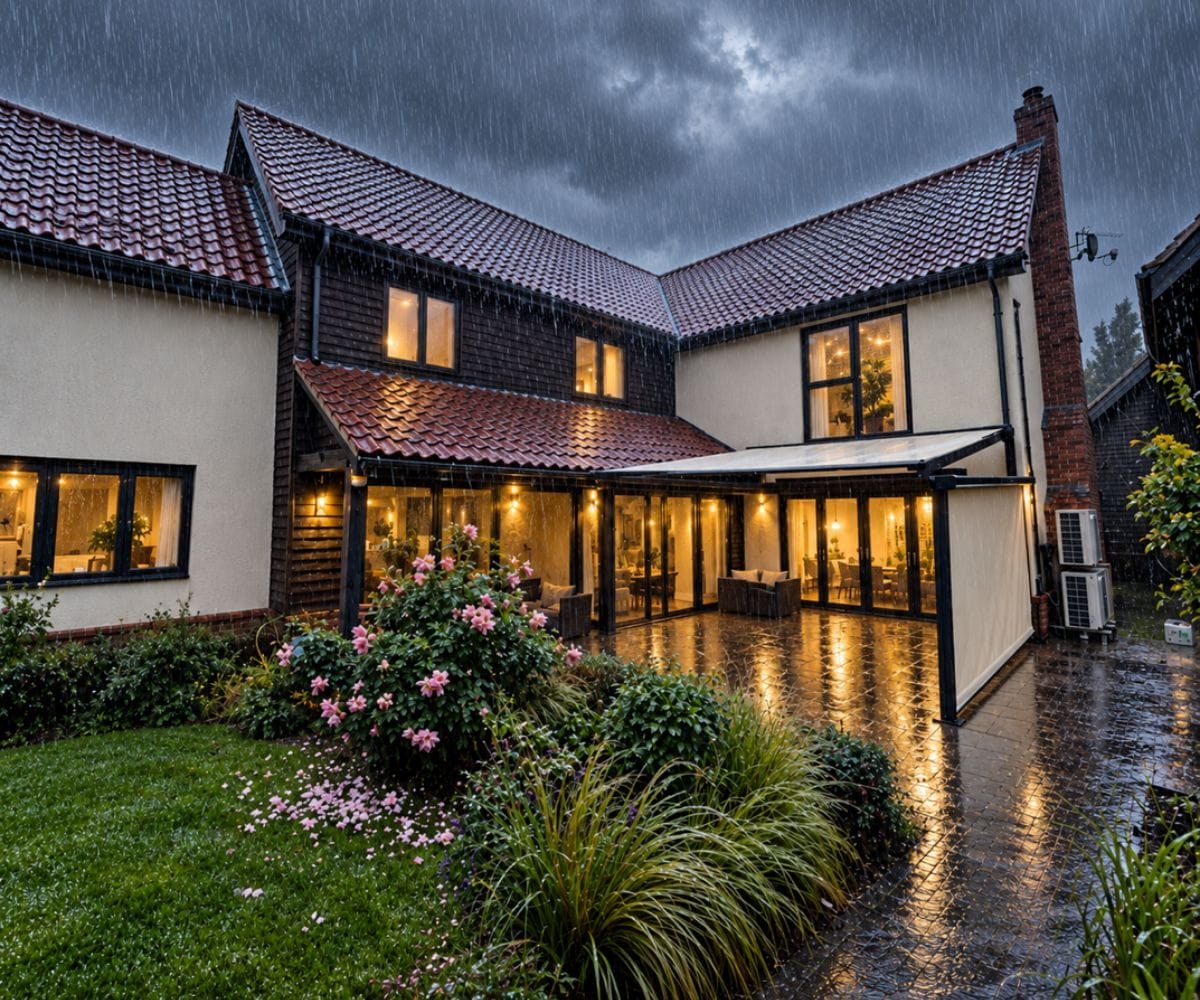
An awning is a flexible, retractable cover for sun and showers. If you want to sit outside through heavy rain and blustery autumn evenings, a fixed structure is the better fit. A garden pergola gives permanent cover over a dining or seating area, and a glass veranda keeps the rain off completely while letting the light through. You can read about how we work, from first survey to final fitting.
Want to Enjoy Your Garden in Any Weather?
The Great British Awning & Blind Company has more than 40 years of experience creating outdoor living spaces for British homes. Every awning is designed around your property, made in our own UK workshop, fitted by our own installation team and covered by a 10-year fully comprehensive warranty. As Which? Trusted Traders, we will give you honest advice on what suits your garden and the weather it sees. Book your free, no-obligation design consultation, call 0800 048 7700 or explore our residential awnings.
FAQs
Can you leave an awning out in the rain?
Yes, a quality awning can stay out in light to moderate rain. Make sure it is pitched so the water runs off, and retract it if the rain becomes torrential or the wind picks up. Let the fabric dry before leaving it rolled away for a long spell.
Are awnings waterproof or only water-resistant?
It depends on the fabric and its coating. Our awning fabric is treated with the Infinity Process, which makes it impermeable to rainfall and repels water, oil and dirt. Fabrics with lighter treatments may let water through in heavier rain.
How much wind can an awning handle?
It varies by model, so always ask for the wind-test rating. Our awnings are wind tested to winds of up to 28 km/h, the top of a moderate breeze on the Beaufort scale. In stronger wind, retract the awning to protect the arms, fixings and fabric.
Can you use an awning in the rain all year round?
You can use it for showers in any season. For regular use in heavy rain or winter weather, a pergola or glass veranda gives fixed, all-weather protection.