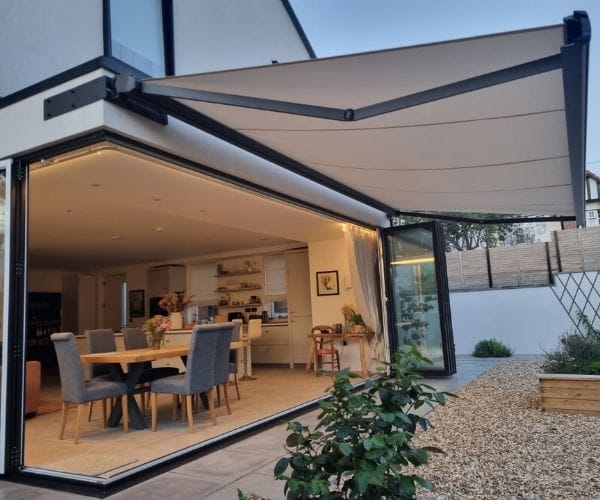
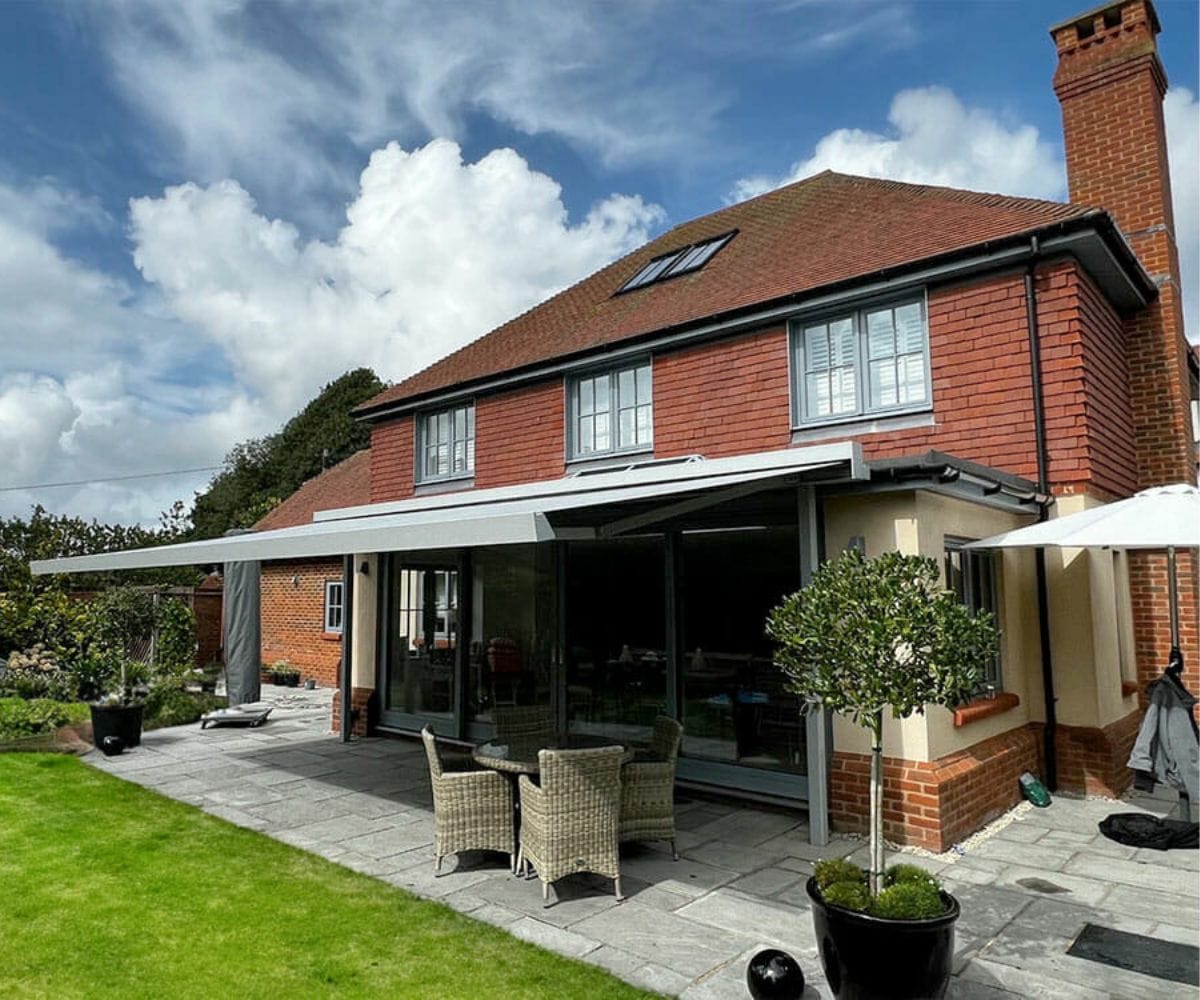
Most people choosing an awning think about colour, size and how it will look against the back of the house. Not as many people think about what happens to that colour two summers from now.
Fabric quality is the single biggest factor in how an awning ages, and it is the detail that separates an installation you will still be proud of in a decade from one that looks tired within a few seasons.
Do Awnings Fade? The Honest Answer
Yes, some awnings do fade, and they can fade a lot.
Lower-grade materials are vulnerable to UV degradation. The dyes used in standard textile manufacturing sit on the surface of the fibres, and prolonged exposure to sunlight breaks them down. In the UK, where awnings might be extended for weeks at a time during summer, this process adds up quickly.
The result is a canopy that loses its richness, develops an uneven, washed-out appearance, and ultimately reflects poorly on the outdoor space it was installed to enhance.
The good news is that this is entirely preventable, provided the right fabric is specified from the outset.
What Are Solution-Dyed Acrylic Awnings?
Solution-dyed acrylic is the fabric standard used in premium awnings, and it is the most important specification to understand when you are researching a fade-resistant awning.
In conventional textile dyeing, colour is applied to the fibre after it has been spun. The dye penetrates the surface but does not become part of the fibre itself. In solution dyeing, the pigment is introduced into the raw acrylic before the fibre is extruded, meaning the colour runs through the entire cross-section of every thread.
There is no surface layer for UV light to strip away, because the colour is the fibre.
The practical result is a fabric that holds its colour through years of sun exposure, rain, and the full range of British seasonal conditions.
Research published by the Skin Cancer Foundation confirms that high-quality shade fabrics block a significant proportion of UV radiation, protecting both the people beneath the awning and the fabric itself from photodegradation.
Solution-dyed acrylic awning fabric also performs consistently across all colourways.
Deeper tones, which are typically more vulnerable to fading in standard fabrics, retain their depth just as much as lighter shades. This matters if you want a bold, richly coloured awning that continues to make a statement years after installation.
Thinking About a New Awning This Summer?
If fabric quality and long-term performance matter to you, we would be glad to talk it through. Call us on 0800 048 7700 or arrange a free home survey with one of our specialists.
UV Protection Awnings: What Does 98% UV Block Actually Mean?
A quality solution-dyed acrylic awning blocks up to 98% of UV radiation. That figure is worth understanding properly because it affects not only the longevity of the fabric itself but the comfort and safety of the space you are creating.
UV radiation is responsible for fabric degradation, surface bleaching, and the breakdown of colours in lesser materials. A fabric with a 98% UV block is resisting the very forces that would otherwise cause it to fade. At the same time, it is filtering the light reaching the outdoor dining area beneath it, reducing glare and lowering surface temperatures on furniture, tableware, and the ground itself.
The NHS recommends shade as a primary sun protection measure during peak UV hours, noting that even on overcast British days UV levels can be high enough to cause damage.
A well-specified awning fabric contributes meaningfully to this, making your outdoor entertaining space safer as well as more comfortable.
How Solution-Dyed Acrylic Awnings Perform in British Conditions
The UK presents a specific set of challenges for outdoor fabrics that a warm, consistently dry climate does not. British summers combine UV exposure with intermittent heavy rain, prolonged periods of damp, and fluctuating temperatures. A fabric that performs well in southern Europe is not automatically the right choice here.
Colourfastness in Variable Weather
Solution-dyed acrylic awning fabric is inherently colourfast because the pigment is locked into the fibre structure. Rain does not leach the colour, and the repeated cycle of wet and dry that characterises a British summer does not cause the uneven fading that affects surface-dyed alternatives.
The awning looks the same after a wet August as it did at the beginning of July.
Mould and Mildew Resistance
Damp conditions create the ideal environment for mould growth on outdoor fabrics, and this is one of the most common causes of premature deterioration in lower-grade awning canopies. Solution-dyed acrylic awnings are engineered to resist mould and mildew at a fibre level, not simply treated with a surface coating that wears away over time.
This means the anti-mould performance is durable rather than temporary, and the fabric continues to resist biological growth throughout its service life.
Water Repellency
Premium acrylic awning fabric is tightly woven and treated to repel water rather than absorb it, allowing the fabric to shed light rain cleanly. This water repellency works in tandem with the mould resistance, preventing saturation that would otherwise accelerate deterioration.
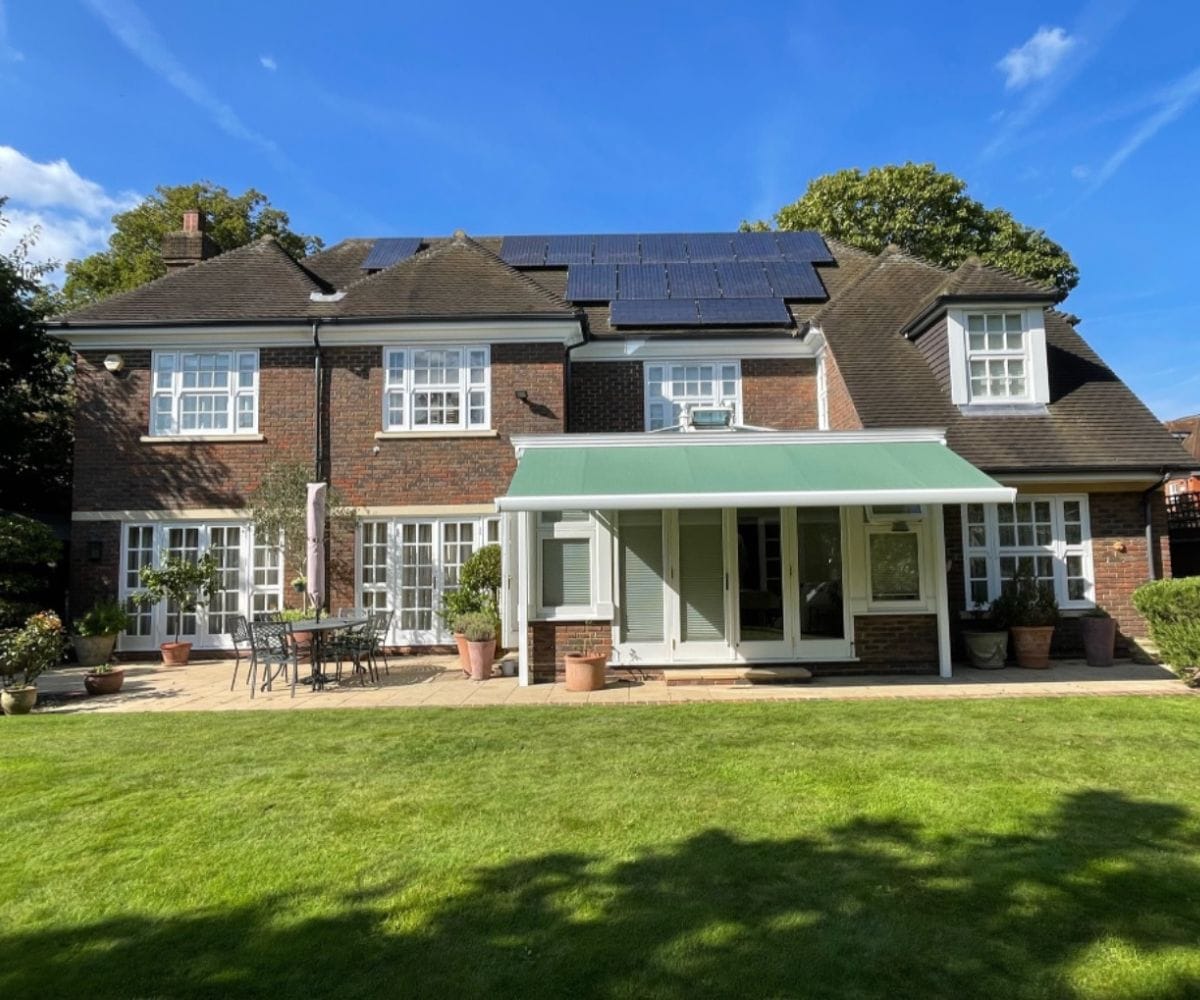
What This Means When You Are Choosing an Awning
Understanding solution-dyed acrylic and UV protection awning performance gives you the right questions to ask of any supplier.
At The Great British Awning and Blind Company, all of our electric patio awnings use premium solution-dyed acrylic fabric as standard.
Our canopies are manufactured in our own UK workshop, backed by a 10-year product warranty, and installed by our own specialist team. We are Which? Trusted Traders accredited, and every project begins with a free, no-obligation home survey.
FAQ
Do awnings fade in the UK?
Lower-grade awning fabrics do fade, particularly polyester and standard acrylic blends where dye sits on the fibre surface. Premium solution-dyed acrylic awning fabric does not fade in the same way, because the pigment runs through the entire fibre. Specified correctly, a quality awning should hold its colour for many years in British conditions.
What is the best fabric for a fade-resistant awning?
Solution-dyed acrylic is the industry standard for fade-resistant awning fabric. The colour is integrated into the fibre during manufacture rather than applied to the surface, making it resistant to UV degradation, rain, and the variable conditions of a British summer.
How much UV does an awning block?
A quality solution-dyed acrylic awning blocks up to 98% of UV radiation. This protects the fabric itself from photodegradation and provides meaningful sun protection for the people and furnishings beneath it. The NHS identifies shade as a primary sun protection measure, particularly during peak UV hours.